
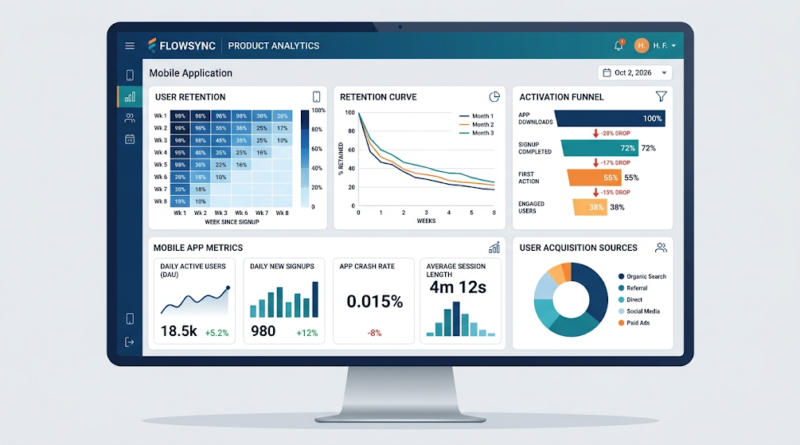
Why Users Delete Apps in the First Week: 7 Reasons
Understanding why users delete apps during their first week is one of the most critical challenges for any startup or technology company. Investing months of engineering effort and marketing budget into a mobile application is a major milestone, yet watching download numbers tick upward on launch day can quickly turn into anxiety when product analytics reveal a harsh reality: a significant portion of those new users vanish before seven days have passed. The first week acts as a rigorous trial period where users evaluate whether an application genuinely solves their problem or simply adds clutter to their home screen. Uncovering the root causes of early abandonment requires examining the friction points that turn curiosity into frustration.
Understanding Why Users Delete Apps: First Impressions and Onboarding
The initial minutes of interaction set the tone for the entire user lifecycle. When an onboarding flow is burdened by friction, users abandon the product before experiencing its core utility.
1. Lengthy Registration and Forced Account Creation
Many products demand email verification, profile creation, and extensive personal data collection before the user is even allowed to see the interface. This premature barrier creates friction. For instance, consider a hypothetical productivity app designed to help freelancers track daily tasks. If a new user opens the app and immediately faces a multi-step registration form requiring demographic details, they may choose to delete the application rather than invest the time.
2. Unclear Guidance and Delayed Time-to-Value
Even when registration is streamlined, failing to guide users toward a meaningful initial action causes drop-off. Time-to-value—the speed at which a user realizes the utility of a product—should be as short as possible.
To improve the mobile app onboarding experience, product teams should adopt progressive onboarding strategies. Instead of forcing users through an exhaustive slideshow of app features, introduce capabilities contextually as the user navigates the interface. Allow guest access or social logins where appropriate, and ensure users complete their first meaningful task within the first two minutes of opening the application. Tracking onboarding drop-off rates through product analytics helps pinpoint the exact screen where user momentum stalls.
Slow, Confusing, or Buggy: UX Problems That Drive Users Away
Technical stability and interface clarity are foundational to user retention. When an application fails to meet basic performance standards, user trust evaporates quickly.
3. Performance Delays and App Crashes
Users expect mobile software to be fast and responsive. If an e-commerce mobile app takes five seconds to load a product catalog or crashes when a user taps a category filter, patience runs out. A single unexpected crash during a high-intent session is often enough to drive an uninstallation.
4. Clunky Navigation and Inconsistent Layouts
Complex menus, hidden actions, and non-standard touch targets make applications difficult to use. Accessibility issues, such as low contrast text or buttons that are too small for touch interaction, further alienate users.
Maintaining high standards requires rigorous performance monitoring and quality assurance. Engineering teams should track metrics such as crash-free sessions, average response times, and task completion rates across various operating systems and network conditions. Continuous usability testing across multiple device screen sizes ensures that minor bugs do not escalate into systemic retention leaks.
The Expectation Gap: When an App Doesn’t Deliver on Its Promise
Acquisition marketing and app store listings create initial expectations. When reality fails to match those promises, dissatisfaction sets in immediately.
5. Misleading Marketing and Missing Core Features
An application that advertises robust automated data synchronization but offers only clunky manual entry creates an immediate expectation gap. Similarly, if users download a financial tracking tool expecting specific budgeting calculators, only to find those features locked behind an unexpected paywall or entirely absent, they feel misled.
Bridging this gap requires strict alignment between marketing messages and functional capabilities. Product-market fit relies on clear communication. If an app solves a specific niche problem, the App Store and Google Play descriptions should clearly state what the software does—and what it does not do—so that downloads translate into genuine, qualified engagement.
Too Many Notifications, Too Little Value: What Frustrates New Users
As users settle into the first week, how a product communicates and monetizes can either cement loyalty or trigger an immediate deletion.
6. Aggressive Push Notifications and Intrusive Alerts
Bombarding new users with generic push notifications within the first forty-eight hours creates annoyance rather than engagement. If a fitness app sends three promotional alerts before the user has even completed their first workout, the notifications feel intrusive rather than helpful.
7. Premature Paywalls and Invasive Data Requests
Demanding subscription commitments before the user has evaluated the core value proposition is a primary driver of user churn. Similarly, requesting sensitive permissions—such as precise location tracking or contacts access—without providing a clear, immediate justification damages trust.
To counter these issues, product teams should practice permission timing. Ask for notification preferences or system permissions only after the user has performed an action that makes the request contextually relevant. Monetization prompts should follow a value-first model, ensuring users experience the core benefits of the product before encountering subscription tiers.
From First Download to Long-Term Loyalty: How to Improve App Retention
Reducing early churn requires a systematic approach to product improvement. How can developers reduce app uninstall rates and improve user retention? The answer lies in combining continuous measurement, user feedback, and iterative design.
Implementing a robust app retention strategy involves several core practices:
-
Simplify onboarding: Remove unnecessary fields and help users complete their first meaningful task quickly.
-
Deliver value early: Focus product design around the core action that demonstrates why the application is worth keeping.
-
Improve reliability: Monitor crash reports, loading delays, and rendering bugs proactively.
-
Personalize the experience: Adapt relevant content and guidance to user goals without cluttering the interface.
-
Use feedback intelligently: Collect qualitative feedback at natural friction points and make it easy for users to report bugs.
-
Measure retention: Track day-one, day-seven, and long-term cohort retention to understand how user behavior evolves over time.
-
Run experiments: Test onboarding variations, copy changes, and layout adjustments while monitoring their impact on engagement metrics.
It is worth noting that retention expectations vary significantly by product category. Daily-use messaging and social apps naturally see very different retention curves compared to transactional utilities, travel booking tools, or enterprise SaaS applications. Benchmarking should always be contextual to the specific business model.
A Practical Framework for Product Teams
When diagnosing early abandonment, product teams can follow a structured five-step framework:
-
Observe: Review product analytics to identify where users disengage during their first week.
-
Diagnose: Investigate qualitative data, user session recordings, and support tickets to understand the reasons behind the drop-off.
-
Prioritize: Focus engineering and design resources on fixing problems that have the most significant impact on user retention and business goals.
-
Experiment: Deploy targeted product improvements or alternative onboarding flows.
-
Measure: Compare post-experiment cohort performance against your baseline to evaluate success.
When analyzing these metrics, keep in mind the distinction between correlation and causation. For instance, if users who complete a tutorial show higher day-seven retention, it does not automatically prove that the tutorial caused their loyalty; highly motivated users may simply be more patient with tutorials. Testing and iteration help isolate true drivers of engagement.
Next Steps for Your Application
Addressing early app abandonment requires an ongoing commitment to refining user experience, technical performance, and onboarding clarity. If your organization is preparing to launch a new mobile application or looking to audit and improve the retention metrics of an existing product, professional guidance can make a measurable difference.
Partnering with an experienced software development team ensures your application is built on scalable architecture, backed by thorough quality assurance, and integrated with advanced product analytics. Whether you need end-to-end mobile app development, specialized UX/UI design, custom software engineering, or code auditing services, collaborating with seasoned technology strategists helps turn first-week downloads into long-term user loyalty. Contact our team today to discuss your app idea, evaluate your current product challenges, and explore how we can help you build high-performing digital solutions.
