
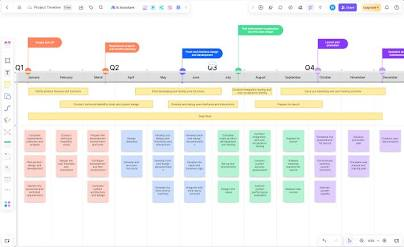
The Truth About Every Software Development Timeline: Why Projects Take Longer
You sit across the table from a development team, outline your software idea, and hear the phrase every founder or product leader secretly loves: “That’s pretty straightforward. We can build it in a few weeks.” It sounds like music to your ears. You can already picture the launch party, the user adoption curve, and the revenue rolling in. But more often than not, that cheerful initial estimate acts as a countdown to scope creep, missed deadlines, and frustration. When you look at a realistic software development timeline, “a few weeks” is rarely a reliable metric for anything more than a rudimentary landing page or a basic prototype.
So, how long does it take to develop custom software in reality? The truth is that software engineering is an intricate, iterative process rather than a linear manufacturing assembly line. Let’s unpack why those initial estimates often unravel and what you actually need to look out for when planning your next digital product.
Why “Just a Few Weeks” Is Usually a Red Flag
When an agency or freelance developer hands over a tight, rapid timeline without digging deep into your architecture, they are usually guessing—or telling you what you want to hear to win your business. Early estimates frequently fail to account for the full spectrum of software creation, including thorough requirements gathering, iterative UX/UI design, scalable technical architecture, multi-environment testing, security hardening, client feedback cycles, and post-launch stabilization.
A fast estimate often reflects a lack of discovery rather than elite efficiency. When a development team says yes too quickly, it usually means they haven’t thought through database bottlenecks, complex edge cases, or third-party API dependencies. Conversely, a measured, deliberate timeline does not mean a development team is slow. Instead, it indicates that the team understands the actual scope of the work and is committed to building a stable product that won’t collapse under real-world user load.
The Hidden Work Behind Every Software Timeline
Writing code is the most visible part of building software, but it is only the tip of the iceberg. If you evaluate a software project timeline based solely on coding hours, you are missing a massive portion of the engineering lifecycle. A comprehensive software development process comprises numerous critical stages:
-
Discovery and Requirements: Aligning business goals, mapping user journeys, and documenting functional specifications.
-
Product Planning & Roadmapping: Defining release phases, prioritization matrices, and technical constraints.
-
UX/UI Design: Translating wireframes into intuitive, accessible, and conversion-focused digital interfaces.
-
Technical Architecture: Choosing the right tech stack, database schemas, server infrastructure, and scalability models.
-
Development: Writing frontend and backend code, building APIs, and implementing core business logic.
-
API and Third-Party Integrations: Connecting payment gateways, CRM tools, authentication providers, and legacy systems.
-
Quality Assurance (QA) and Testing: Executing automated and manual tests across multiple devices, browsers, and operating systems.
-
Security Checks: Conducting vulnerability assessments, data encryption reviews, and compliance checks.
-
Client Feedback and Revisions: Managing stakeholder review rounds and refining features based on user testing.
-
Deployment: Setting up production environments, continuous integration/continuous deployment (CI/CD) pipelines, and release management.
-
Post-Launch Stabilization: Monitoring performance, fixing immediate bugs, and optimizing user telemetry.
When you look at this breakdown, it becomes obvious why a complex application cannot be rushed through a generic template.
7 Common Myths That Make Projects Take Longer
Unrealistic expectations are the silent killer of project schedules. Let’s examine seven common misconceptions that distort a custom software development timeline and what you should believe instead.
1. “The design is already done, so development will be quick.”
Having Figma files in hand is great, but static designs rarely account for responsive layouts, micro-interactions, loading states, error handling, or backend data constraints. Translating a flat visual into a dynamic, state-aware application requires significant engineering effort.
2. “Adding one small feature won’t affect the timeline.”
In software, minor additions carry compounding ripple effects. A “small feature” like adding social logins requires backend authentication updates, database schema changes, privacy policy compliance, UI adjustments, and extra testing.
3. “We can figure out the requirements as we build.”
Writing code without a defined scope is like building a skyscraper without blueprints. Changing structural foundations halfway through construction forces costly rewrites that derail your schedule.
4. “Using AI means the whole project will be finished much faster.”
AI coding assistants accelerate syntax generation and boilerplate tasks, but they do not replace architectural planning, rigorous code reviews, security audits, or complex business logic integration.
5. “A similar app already exists, so ours should be easy to build.”
Building a clone of an established platform sounds simple, but you are usually underestimating the hidden integrations, proprietary algorithms, and enterprise-grade infrastructure that power those mature applications behind the scenes.
6. “Testing won’t take very long.”
Skipping or condensing QA is a recipe for launching broken code. Comprehensive testing takes time because engineers must test not just how the software works when used correctly, but how it breaks when pushed to its limits.
7. “We can always launch first and fix everything later.”
While launching a Minimum Viable Product (MVP) is smart, launching an unstable, insecure product damages brand reputation and alienates your earliest users. Core stability cannot be retrofitted easily.
What Actually Determines How Long Software Takes to Build?
So, what factors affect a software development timeline? Every software initiative is unique, and duration hinges on a combination of technical, operational, and strategic variables.
To understand how factors affecting software development time play out in the real world, consider how four distinct projects with similar initial budgets can have vastly different schedules:
-
A simple internal business dashboard: Built primarily with pre-designed component libraries, minimal integrations, and trusted internal user roles, this project can often be deployed relatively quickly (typically 6 to 10 weeks).
-
A customer-facing SaaS product: Requires robust multi-tenant architecture, billing integrations (like Stripe), advanced analytics, and polished user experience design, typically pushing the schedule out to 3 to 6 months.
-
A marketplace with multiple user types: Buyers, sellers, and administrators require distinct workflows, matching algorithms, chat systems, secure escrow, and dispute management. This naturally extends the timeline further (often 4 to 8 months).
-
A mobile app requiring heavy third-party integrations: Integrating real-time GPS tracking, Bluetooth device syncing, offline data caching, and push notification services across iOS and Android adds layer upon layer of complexity, making comprehensive software project estimation critical from day one.
Beyond project type, core variables include overall scope, number of user roles, data migration requirements, regulatory compliance (like HIPAA, GDPR, or SOC 2), and internal feedback velocity.
How to Set a Software Timeline You Can Actually Trust
Creating a reliable software development time projection requires discipline, transparent communication, and a structured approach to planning. Business leaders can drastically improve timeline accuracy by following a few practical steps:
-
Define a Strict MVP: Focus strictly on core value-driving features for version one. Defer secondary nice-to-haves to a phase-two roadmap.
-
Prioritize Upfront Discovery: Never skip the discovery phase. Spending two weeks in planning saves months of refactoring during development.
-
Establish Clear Milestones: Break the project down into manageable, demo-ready sprints or milestones so you can track progress visually.
-
Lock Down Decision-Making: Delays often stem from internal bottlenecks. Appoint a single decision-maker who has the authority to sign off on designs, requirements, and scope changes quickly.
-
Build in Buffer Time: Account for holidays, stakeholder review delays, and unexpected technical hurdles by adding a 15–20% buffer to your master schedule.
The Founder’s Timeline Evaluation Checklist
When reviewing a proposal from a software partner, ensure their estimate addresses:
-
[ ] Has a formal discovery and architecture phase been included?
-
[ ] Are UI/UX design and frontend integration explicitly accounted for?
-
[ ] Is there a dedicated QA and bug-fixing window before launch?
-
[ ] Are third-party API dependencies and risks identified?
-
[ ] Is there a clear process for handling mid-project scope changes?
Navigating software development doesn’t have to be a guessing game. Whether you are planning a high-growth SaaS platform, a scalable mobile application, or custom enterprise automation, having a realistic roadmap makes all the difference between a successful launch and a stalled project.
If you have a software idea or an upcoming project and want to define your scope, map out technical requirements, and build a trustworthy development roadmap, our team of engineers and product strategists is here to help. Let’s talk about how to turn your vision into a reliable, high-performing reality.
