Software Idea Validation: Is Your Idea Actually a Business?
Building software is seductive. Writing code, sketching user interfaces, and designing a product architecture feel like real progress. However, spending six months and thousands of dollars building a product before confirming that anyone actually wants it is the fastest way to join the startup graveyard.
How do you know if a software idea is worth building? The truth is that technical brilliance and product elegance mean nothing if the market doesn’t care. To protect your capital, time, and sanity, you need rigorous software idea validation long before your engineering team writes the first line of code.
A Great Software Idea Isn’t Automatically a Great Business
Many founders make the fatal mistake of conflating a clever technical concept with a commercial opportunity. They fall in love with their own solution, assuming that if they build it, users will naturally appear.
In reality, a great software idea is merely a hypothesis. It assumes that a specific group of people experiences a painful problem, that they care enough to solve it, that they have the budget to pay for a solution, and that you can reach them profitably.
When you validate a software idea, you are testing those underlying assumptions. You are separating a hobbyist project or an interesting feature from a scalable, revenue-generating software business idea. Without this validation, you risk building a masterpiece that no one buys.
7 Signs Your Software Idea Has Real Business Potential
How can you tell if your concept has genuine commercial legs? Look for these seven practical signs in the market before committing to full-scale development.
1. There is a clearly defined, “hair-on-fire” customer problem
A mild inconvenience is not enough to drive software adoption. Users rarely switch workflows or adopt new tools to solve minor annoyances. Your software must solve a problem that is urgent, painful, and recurring. If potential users describe the problem with frustration, emotion, or financial loss, you are looking at a strong foundation for software product validation.
2. Customers are already hacking together makeshift solutions
When a problem is truly painful, people don’t wait for a dedicated software product to appear—they improvise. If your target audience is currently juggling messy Excel spreadsheets, complex Zapier chains, custom internal scripts, or manual data entry to plug the gap, you have definitive proof that demand exists. They are desperate for a streamlined alternative.
3. You have identified a specific and reachable target market
“Everyone is our customer” is the anthem of failing startups. A viable software business idea targets a specific niche where you can easily find, understand, and communicate with buyers. Whether it’s mid-sized logistics firms in North America or independent veterinary clinics, you must be able to point to where these people congregate online and offline, and outline a clear path to reach them.
4. There is clear evidence that people are willing to pay
Free users do not validate a business model. Look for tangible signals of willingness to pay. Are companies currently spending budget on human labor to fix this problem? Are they paying for adjacent, inferior tools? If businesses or consumers are already investing financial resources to mitigate the pain point, they will readily pay for a superior software solution that saves them time or increases revenue.
5. You possess a realistic competitive advantage or differentiation
If the market is crowded, entering with a slightly cheaper or slightly prettier clone rarely succeeds. Real business potential requires a defensible angle—whether that is a proprietary workflow, an underserved niche, a novel integration, or a 10x performance improvement over legacy incumbents. If you cannot articulate why a customer would switch from their current state to your product in one sentence, your positioning needs work.
6. The unit economics support a viable revenue model
Can you acquire customers at a cost that leaves room for healthy margins? A high-value B2B SaaS product sold to enterprise clients can support a high-touch sales model, whereas a low-cost micro-SaaS requires automated, self-serve acquisition. Examine your potential pricing structure against your expected delivery and operational costs. If the math doesn’t work at scale, the idea remains a feature, not a business.
7. The problem is significant enough to support long-term demand
Fads fade, but fundamental business inefficiencies persist. Ensure your software addresses a structural challenge rather than a temporary trend. A strong software business idea solves problems that grow as your customers grow, naturally driving high retention, low churn, and expansion revenue over time.
How to Validate Demand Before You Build
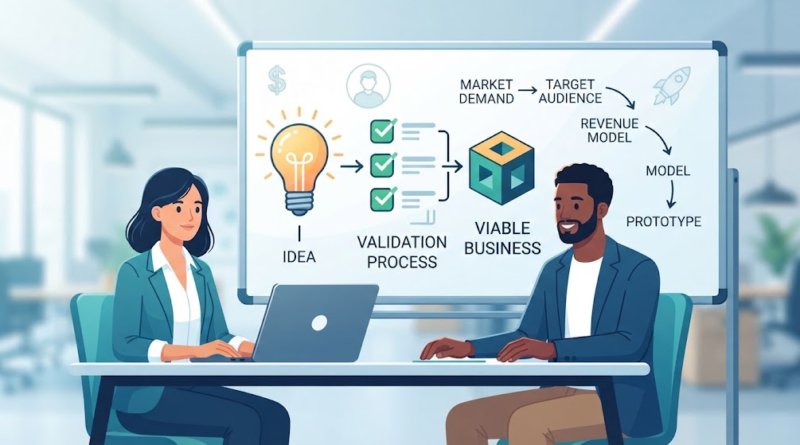
Knowing the signs is only half the battle. You need a systematic approach to test your assumptions in the real world. Here is how to validate a SaaS or software business idea before development using lean, practical methods.
Customer Interviews
Talk to at least 15 to 20 potential users within your target market. Crucially, do not pitch your idea during these conversations. Instead, ask open-ended questions about their current workflows, where they waste the most time, and how they currently solve the problem. Listen for emotional cues and specific pain points. If they don’t bring up the problem you intend to solve, your hypothesis is flawed.
Competitor and Market Research
Analyze existing solutions in the space. Read through negative reviews of competitor products on G2, Capterra, or Trustpilot. Look for recurring complaints about missing features, poor user experience, or inflexible pricing. These negative reviews represent open doors for your product positioning.
Landing-Page Tests and Waitlists
Build a simple, high-converting landing page that clearly articulates the value proposition of your proposed software. Drive targeted traffic to the page using modest ad spend or organic outreach, and invite visitors to join an exclusive waitlist or request early access. Tracking conversion rates gives you hard data on whether people care enough about the headline benefit to take action.
Clickable Prototypes and Design Sprints
Before writing code, use tools like Figma to design a clickable mockup of your core user journey. Put this prototype in front of prospective users and watch them navigate it. Their hesitation, confusion, or enthusiasm will reveal whether your proposed interface and core value proposition actually make sense to the end user.
The Numbers That Can Make or Break Your Software Idea
Many founders neglect the commercial mechanics of their product until it is too late. Before greenlighting software MVP development, run through a simple financial sanity check.
Consider a hypothetical B2B SaaS product priced at $100 per month ($1,200 annually).
-
Customer Acquisition Cost (CAC): If you rely on paid advertising and outbound sales, and it costs you $1,500 in combined ad spend and sales labor to close a customer, you are losing money on day one.
-
Customer Lifetime Value (LTV): If your average customer churns after 6 months, their lifetime value is only $600. An LTV that fails to comfortably exceed your CAC (ideally by a 3x ratio) indicates a broken business model.
-
Gross Margins: Software typically enjoys high gross margins (often 70% to 85% after hosting and support costs), but you must factor in third-party API costs, customer success overhead, and infrastructure scaling.
Evaluating these numbers early ensures you aren’t building a product that costs more to sell and maintain than it ever generates in revenue.
From Idea to MVP: What to Do Before Writing Code
Once you have gathered qualitative validation from interviews and quantitative signals from landing pages or waitlists, you are ready to transition toward execution. This is where software development for startups begins—not with a massive engineering roadmap, but with a disciplined Minimum Viable Product.
Define the Core Value Proposition
Strip away all secondary and tertiary feature ideas. What is the single, undeniable value your software delivers to the user on day one? Focus exclusively on building the vehicle that delivers that core promise.
Build a True MVP
An MVP is not simply a buggy, unfinished version of a massive software suite. It is the smallest possible iteration of your product that allows you to test your core business assumptions with real users under real-world conditions.
Prioritize and Iterate
Map out your feature backlog using a strict framework (such as MoSCoW: Must-haves, Should-haves, Could-haves, Won’t-haves). Launch the “Must-haves” into the hands of your early users, measure their engagement, track retention, and iterate based on actual behavior rather than assumptions. This iterative approach is the cornerstone of successful software product validation and long-term viability.
Turn Your Validated Software Idea into Reality
Validating a startup idea requires discipline, objectivity, and a willingness to adapt your assumptions before capital is spent. However, once you have confirmed real market demand, clear customer pain, and a viable business model, the next critical step is execution.
If you have evaluated your software concept, mapped out your target market, and are ready to turn your insights into a high-performing MVP, you don’t have to navigate development alone. Partnering with an experienced software development team ensures your product is engineered for scalability, security, and user adoption from day one.
Contact our team today to discuss your project requirements and learn how we can help bring your validated software product to market.
